
Table of Contents
- Why Premium Engine Parts Matter for 2026 Performance
- The Real Difference Between Aftermarket UTV Engine Parts and Budget Alternatives
- OEM vs Aftermarket Engine Parts: Which Delivers Long-Term Value
- Selecting the Right UTV Engine Upgrade Parts for Your Machine
- UTV Engine Maintenance After Upgrades: Protecting Your Investment
- Performance Gains, Durability, and Real-World Reliability
- Total Cost of Ownership: Why Cheap Parts Cost More Over Time
- Conclusion
- Frequently Asked Questions
Last Updated: October 14, 2026
Why Premium Engine Parts Matter for 2026 Performance
When you upgrade your UTV or ATV engine, the choice between premium components and budget alternatives defines your machine's performance, reliability, and lifespan. At Updog Industries, our experts with over two decades of automotive and e-commerce experience understand how the right parts transform a machine.
Most riders assume all engine parts are basically the same. They're not. The difference between a precision-engineered component and a budget knockoff shows up immediately in how your engine runs, and it compounds every season.
The Real Difference Between Aftermarket UTV Engine Parts and Budget Alternatives
Aftermarket UTV engine parts come in two categories: premium components engineered to exacting standards, and budget alternatives designed to hit a price point.
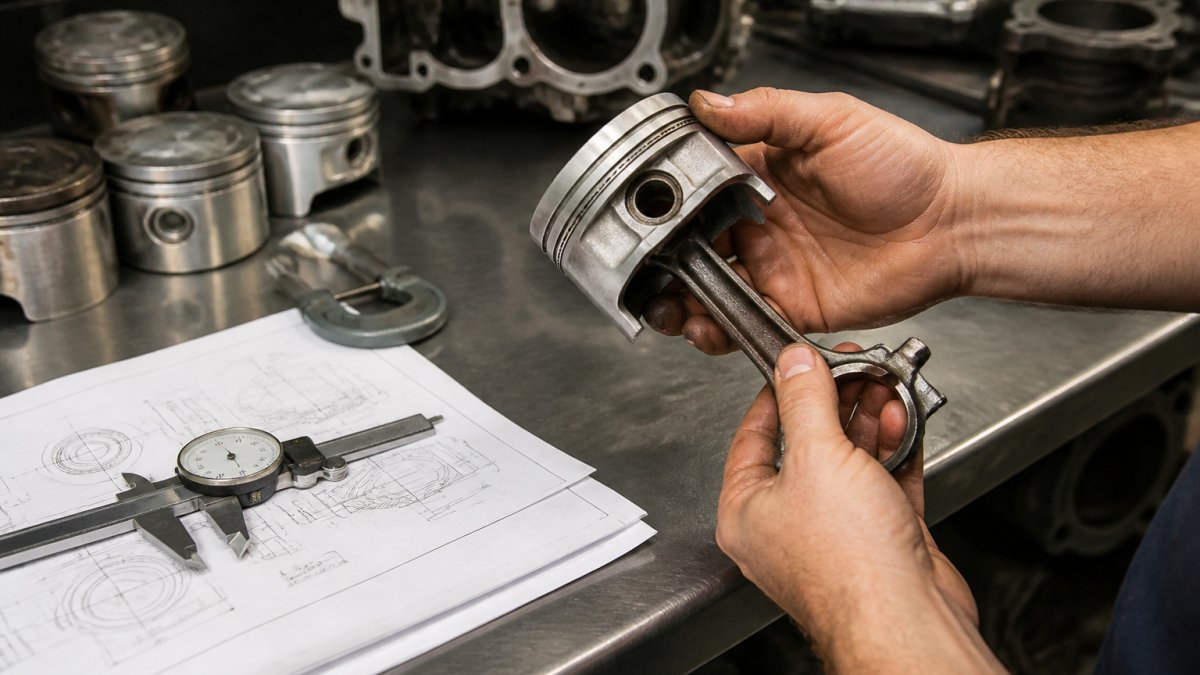
Premium aftermarket parts are built to specifications. Manufacturers like Wiseco and ProX Racing Parts use aerospace-grade materials, CNC machining, and heat-treated steel, testing every component for dimensional accuracy and durability. A Wiseco piston, for example, is forged from high-strength aluminum alloy with precision ring grooves and thermal-resistant coatings for sustained high-RPM operation.
Budget parts cut corners everywhere. Lower manufacturing tolerances mean inconsistent fit. Cheaper materials fatigue faster. Quality control is minimal. You might save $50 on a piston or bearing kit upfront, but you're gambling with your entire engine.
The real difference shows up in three ways:
- Dimensional precision: Premium parts fit exactly. Budget parts have wider tolerances, causing excess wear, lost compression, and premature failure.
- Material quality: Premium components use alloys and coatings that resist heat and friction. Budget parts use basic materials that deteriorate quickly.
- Engineering for duty: Premium parts are designed for the specific stresses your engine experiences. Budget parts are generic placeholders.
When you install a premium piston like the Wiseco 4979M09600 for Honda CRF450R, you get aerospace-grade aluminum with a domed design that improves combustion flow and torque response, plus an ArmorGlide skirt coating that reduces friction and wear.

OEM vs Aftermarket Engine Parts: Which Delivers Long-Term Value
OEM parts are factory originals; aftermarket parts are made by third-party specialists. Neither is automatically better, context matters.
OEM parts are reliable but expensive. They're engineered for your machine with perfect fitment, but OEM pricing reflects buying directly from the manufacturer.
Premium aftermarket parts offer better value. Companies like Hot Rods and ProX Racing Parts specialize in high-performance components and compete on quality and price. A Hot Rods main bearing and seal kit costs less than OEM equivalents but meets or exceeds factory tolerances.

The long-term value calculation is straightforward:
- OEM: High upfront cost, zero upgrade benefit, reliable for stock engines
- Premium aftermarket: Moderate cost, performance gains, proven reliability
- Budget aftermarket: Low cost, poor reliability, expensive repairs
For most riders, premium aftermarket engine parts deliver the best total value: performance improvements, proven durability, and lower lifetime costs.
Selecting the Right UTV Engine Upgrade Parts for Your Machine
Choosing the right parts requires understanding two factors: component quality and vehicle-specific fitment.
Component Quality and Manufacturing Tolerances
Budget parts have loose tolerances. A budget piston might vary by 0.5mm from unit to unit. That variation compounds through your engine. Compression becomes inconsistent. Wear accelerates unevenly.
How do you tell the difference?
- Check the manufacturer. Wiseco, Hot Rods, and ProX Racing Parts publish manufacturing standards and test components before shipping.
- Look at material specs. Premium pistons use aerospace-grade aluminum alloy; budget pistons use basic casting aluminum.
- Examine surface treatments. Premium components have thermal-resistant coatings. Budget parts have none.
Every part in Updog Industries' catalog meets these standards. We curate only premium, race-proven components from industry-leading brands.
Compatibility and Vehicle-Specific Fitment
The wrong part won't fit, even if it looks right. A piston designed for a 2012 Honda CRF450R won't work in a 2013 model. A bearing kit for a Suzuki LTZ400 won't fit a Kawasaki Bayou.
Before buying any premium engine part, verify three things:
- Year and model match. Check your vehicle's VIN or registration and write down the exact year, make, and model.
- Engine displacement. A 400cc engine uses different parts than a 450cc engine, even from the same manufacturer.
- Fitment confirmation.
At Updog Industries, every product listing includes exact fitment information, which years and models each part fits. If you're unsure, our team can confirm fitment before you buy.
UTV Engine Maintenance After Upgrades: Protecting Your Investment
Installing premium engine parts is only half the job. The other half is the break-in and maintenance routine that determines whether a precision component reaches its expected service life or fails early. Most post-upgrade failures trace back to installation errors or skipped break-in steps, not the parts themselves.
Break-In Procedure for New Pistons, Rings, and Bearings
New piston rings need cylinder-wall pressure and heat cycles to seat against the hone pattern, and new bearings need a gradual load ramp so the oil film stabilizes. Engine builders use a staged break-in rather than a single easy ride:
- Heat cycles first. Run the engine at idle to moderate RPM until it reaches operating temperature, then shut it down and let it cool completely. Repeat two to three times so the piston expands and contracts against the cylinder without loading the rings.
- Vary the load, avoid steady RPM. During the first 50-100 miles, accelerate and decelerate through the mid-range instead of holding one throttle position. Ring seating depends on cylinder pressure changes, not on babying the engine.
- Stay under about 75% throttle and avoid sustained high-RPM operation until the first oil change. Short bursts of moderate load beat long easy cruises.
Installation Mistakes That Shorten Part Life
Even premium components fail when installation is rushed. The most common mistakes on UTV and ATV engine work:
Wiseco 4979M09600 Honda 2009-12 CRF450R 4VP Domed 13:1 CR Piston →
- Reusing torque-to-yield fasteners. Head bolts and some connecting-rod bolts stretch permanently and must be replaced, not reused. Reusing them can cause head-lift or rod failure.
- Skipping the torque sequence. Cylinder heads and cases need a staged, cross-pattern torque sequence to the manufacturer's spec. Guessing or tightening in a circle distorts the mating surface.
- Ignoring piston-to-wall clearance. A forged piston expands more than a cast piston and needs the manufacturer's specified clearance for your bore. Too tight causes scuffing; too loose causes piston slap and oil consumption.
Ongoing Maintenance After the Break-In Window
Once the engine is broken in, the maintenance schedule shifts to protecting the investment:
- Oil changes. Premium components are less tolerant of contaminated oil than worn-in stock parts. Shorten your interval from the factory schedule if you ride in dust, mud, or extreme heat.
- Air filtration. A high-flow filter that doesn't seal properly lets fine dust past the intake into the cylinder. Check the seal, not just the filter element.
- Valve clearance. Check and adjust at the interval your service manual specifies. Tight valves cause compression loss and can burn a valve.
Performance Gains, Durability, and Real-World Reliability
Claims about premium engine parts are easy to make and hard to verify. Here's what premium parts actually change inside the engine, how to evaluate claims, and where the limits are.
What Premium Parts Change Mechanically
A high-compression forged piston raises the compression ratio, increasing the pressure and temperature of the air-fuel charge at ignition.
A precision bearing reduces friction and maintains a more consistent oil film at high RPM. Less friction means less heat and wear, but only if oil pressure and oil quality are maintained.
A forged piston is denser and more resistant to detonation than a cast piston, so it survives sustained high-RPM use better.
How to Evaluate Performance and Durability Claims
When you read a claim that a part lasts three times longer or adds a specific horsepower gain, ask these questions:
- What was the test method? A controlled dyno run, a durability test on a test stand, or a rider impression? Each answers a different question.
- What was the baseline? A gain over a worn stock part is not the same as a gain over a healthy stock part.
- What were the operating conditions? Fuel type, ambient temperature, altitude, and state of tune all change results.
Realistic Reliability Expectations
Reliability from premium parts comes from consistency, not magic. A premium piston produced within a tight tolerance range gives every engine the same combustion behavior, so tuning and jetting stay predictable.
In practice, most riders notice reliability as fewer surprises: consistent compression, stable idle, predictable jetting, and no unexplained metal in the oil. Premium parts don't eliminate wear; they make it predictable and slow it down when the engine is maintained correctly.
Where Premium Parts Do Not Help
Premium parts can't compensate for a bad tune, contaminated oil, an overheating cooling system, or mismatched components. A high-compression piston paired with a stock cam, stock fuel delivery, and low-octane fuel can detonate and fail faster than a stock piston.
Total Cost of Ownership: Why Cheap Parts Cost More Over Time
This is the calculation most riders miss: budget parts seem cheaper upfront, but over time they cost significantly more.
Budget parts fail sooner.
Failure is expensive. When a budget piston fails, you replace the rings, wrist pin, and possibly the cylinder, plus machine shop time and lost riding time, $800-1500 total.
Premium parts cost less over time. A Wiseco piston costs $250. A budget piston costs $80.
The same logic applies to every engine component: premium bearings last longer and fail less often; premium cam chains resist stretching and wear; premium air filters protect your engine better.

When you buy from Updog Industries, you're investing in components that outlast budget alternatives by years.
| Component Type | Budget Lifespan | Premium Lifespan | Cost Difference | Winner |
|---|---|---|---|---|
Conclusion
Premium engine parts aren't a luxury upgrade, they're an investment in reliability, performance, and value. Choosing precision-engineered components over budget alternatives means an engine that runs stronger, lasts longer, and costs less to maintain.
Updog Industries is your premier destination for high-performance powersports parts and accessories, catering to enthusiasts who demand reliability on the track and trail. We provide 100% free shipping sitewide with no minimum order, transparent pricing with no hidden costs, and the confidence that every part you buy is engineered for performance and durability. Shop now and upgrade your engine with components you can trust.
Frequently Asked Questions
Are premium engine parts worth the extra cost?
Premium engine parts justify their cost through superior durability, tighter manufacturing tolerances, and extended service life. A high-compression forged piston like the Wiseco 4979M09600 costs $249.99 but delivers precise combustion flow and thermal efficiency that budget alternatives cannot match. Over a machine's lifetime, fewer replacements and better performance reliability offset the initial investment, making premium parts the smarter financial choice.
What should you replace when upgrading a UTV engine?
A complete engine upgrade typically includes pistons, bearings, cam chains, and seals. The Hot Rods K014 Main Bearing & Seal Kit ($132.00) protects your bottom end from contamination and wear. Paired with a quality air filter like the Uni Filter NU-2373ST ($31.80) and a timing chain such as the ProX 31.3403 ($79.99), you ensure every critical component meets precision standards. Always verify fitment for your specific machine before ordering.
How do premium engine parts affect performance and reliability?
Premium parts like aerospace-grade aluminum forged pistons improve combustion efficiency, boost power output, and reduce engine wear under high-RPM conditions. Precision manufacturing tolerances ensure consistent performance across thermal cycles and extreme operating conditions. Quality seals and bearings prevent fuel dilution and carbon buildup, extending service life. The result is measurable gains in throttle response, peak power, and overall machine durability on track or trail.
How do I choose compatible engine parts for my UTV?
Start by identifying your exact machine year and model, then cross-reference fitment specifications. The Wiseco piston fits Honda CRF450R models 2009-2012 specifically; the ProX cam chain suits Suzuki LT-Z400 (2003-2018) and other models listed in its compatibility range. Verify bore size, compression ratio, and link count match your engine. When in doubt, confirm fitment before purchasing to avoid costly returns or installation delays.