
Table of Contents
- What Makes High Quality Engine Components Stand Out
- Material Composition and Manufacturing Tolerances
- Engine Component Inspection Checklist: Visible Wear and Condition
- How to Inspect Used Engine Parts for Quality Indicators
- Engine Component Fitment and Compatibility: Precision Fit as a Quality Signal
- OEM vs Aftermarket Engine Parts: Quality and Performance Differences
- Quality Documentation, Traceability, and Testing Standards
- Conclusion
- Frequently Asked Questions
Last Updated: October 12, 2026
What Makes High Quality Engine Components Stand Out
High quality engine components are the difference between a machine that runs reliably for years and one that fails unexpectedly on the trail. At Updog Industries, we've learned that quality isn't always obvious from a product listing or a quick visual inspection.
The real signs of high quality engine components go deeper than brand names or price tags. They involve measurable indicators: material composition, manufacturing tolerances, visible condition, documentation standards, and how parts fit together.
This guide covers the specific markers that separate premium engine components from mediocre alternatives. You'll learn how to inspect used parts, understand material specifications, verify compatibility, and distinguish between OEM, aftermarket, and remanufactured options. By the time you finish, you'll have a practical framework for evaluating any engine component before you install it.
Material Composition and Manufacturing Tolerances
The material a component is made from determines how it behaves under pressure, heat, and stress. High quality engine components use aerospace-grade materials and precision machining to meet or exceed original equipment specifications.
Consider pistons as an example. A quality piston like the Wiseco 4979M09600 Honda CRF450R piston is CNC-machined from aerospace-grade aluminum alloy with a specialized skirt coating called ArmorGlide®. This isn't marketing language, it's a specific material choice that reduces friction and improves durability under high-RPM conditions.

Manufacturing tolerances matter equally. High quality engine components are manufactured to exact specifications, often within microns. A bearing with loose tolerances will wear faster and create excessive clearance, leading to knocking sounds and eventual failure.
When evaluating a component's material quality, look for these indicators:
- Material specification callouts in the product documentation (aluminum alloy type, steel grade, elastomer composition)
- Coating or treatment details (ArmorGlide®, hard anodizing, nitriding, heat-treating)
- Precision manufacturing claims backed by actual tolerances, not vague statements
- Heat-treatment specifications for steel components (critical for bearings and crankshafts)
The Hot Rods K014 Main Bearing & Seal Kit, for instance, is built from high-grade steel construction designed to withstand extreme thermal stress. That specification matters because main bearings operate under tremendous pressure, a component with inferior material will degrade faster under load.

Engine Component Inspection Checklist: Visible Wear and Condition
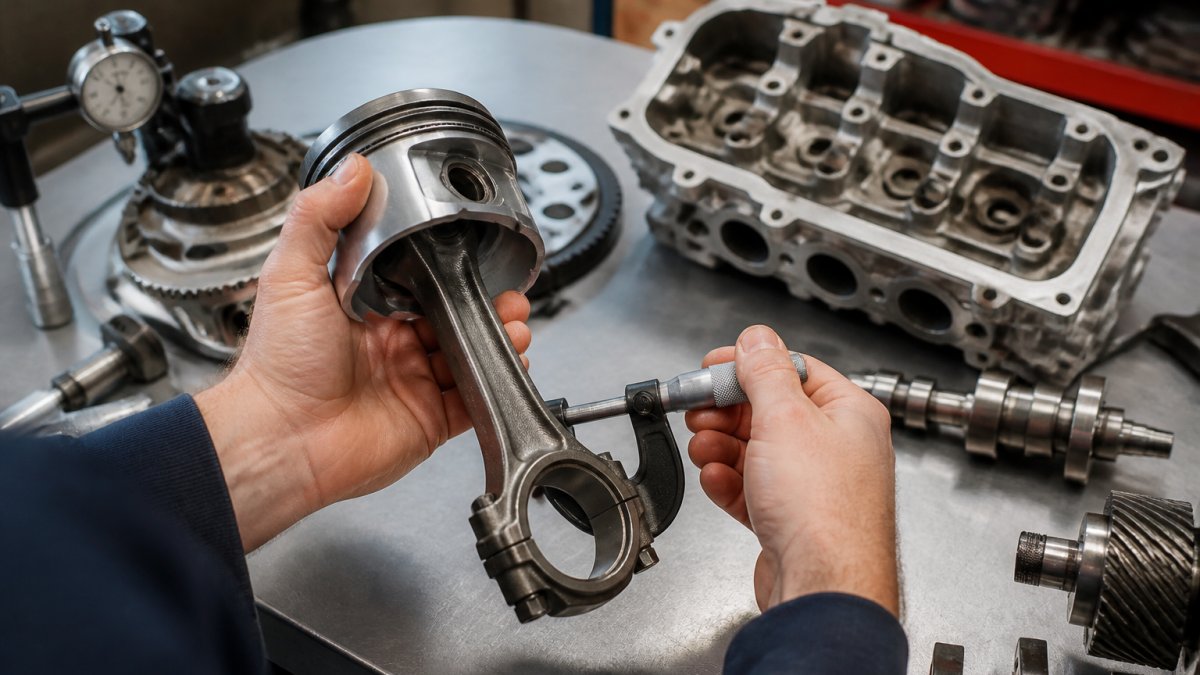
Before installing any used or refurbished engine component, perform a visual and tactile inspection. High quality components show minimal wear and no damage that compromises function.
Here's a practical inspection checklist you can perform yourself:
| Component | What to Check | Sign of Quality | Red Flag |
|---|---|---|---|
| Pistons | Surface finish, scoring, crown condition | Smooth finish, no deep scratches, clean crown | Scoring, pitting, thermal discoloration |
| Bearings | Race surfaces, roller condition | Polished surfaces, no pitting | Spalling, rust, pitting, uneven wear |
| Gaskets | Material, seal surfaces | Pristine condition, no compression set | Cracking, hardening, residue buildup |
| Seals | Elastomer condition, edge integrity | Flexible, no cracks or tears | Hardened, brittle, torn edges |
| Belts & Chains | Tension, link condition, wear | Even tension, clean links, no rust | Stretched, broken links, corrosion |
Visible wear patterns tell a story. Light surface wear is normal and acceptable. Deep scoring, pitting, or thermal discoloration indicates the component has been operating beyond its design limits or in harsh conditions.
For bearings, inspect the race surfaces carefully. A high quality bearing shows a polished, mirror-like finish. Any pitting, spalling, or rust is a sign the bearing has failed or is failing.
Gaskets and seals are harder to evaluate visually if they're new, but if you're inspecting a used gasket that's been removed, look for compression set (permanent deformation).
How to Inspect Used Engine Parts for Quality Indicators
Buying used or refurbished engine components can save money, but it requires careful inspection.
Step 1: Request detailed photos and condition reports. Before purchasing, ask the seller for close-up photos of the component from multiple angles, including the surfaces that contact other parts.
Step 2: Check for manufacturing date codes. Many quality components include date codes stamped or printed on the surface.
Step 3: Measure critical dimensions if possible. For components like pistons, connecting rods, and shafts, ask the seller if they've measured bore diameter, pin diameter, or journal runout.
Step 4: Look for certification or testing documentation. Quality refurbished components often come with inspection reports showing they've been tested for dimensional accuracy, surface finish, and function. The Cometic C3270 Top End Gasket Kit, for example, is manufactured to OEM specifications in the USA with materials chosen for specific thermal and pressure requirements.
Step 5: Verify the component's history. If buying from a machine shop or professional rebuilder, ask how the component was sourced and what testing was performed.
Used engine components from reputable machine shops or certified refurbishers carry implicit quality assurance. Those same components bought from an unknown online seller carry risk.
Engine Component Fitment and Compatibility: Precision Fit as a Quality Signal
High quality engine components are engineered for precise fit. They drop into place with minimal clearance, align perfectly, and require no modification or shimming.
Fitment problems create cascading issues. A piston that's slightly oversized requires honing the cylinder, which is expensive and time-consuming. A bearing with excessive clearance allows the crankshaft to move too much, creating knocking and accelerating wear.
Quality engine components are designed for specific bore sizes, journal diameters, and mounting surfaces. The ProX Timing / Cam Chain (128 Links) is engineered as a direct OEM replacement for specific models, Suzuki DR-Z 400, Kawasaki KLX 400, and others.
Wiseco 4979M09600 Honda 2009-12 CRF450R 4VP Domed 13:1 CR Piston →

When evaluating fitment, consider these factors:
- Bore size and piston diameter must match your cylinder exactly (measured in millimeters to two decimal places)
- Journal diameters for crankshafts and connecting rods must match your engine's specifications
- Gasket thickness and surface dimensions must align with your engine's mounting surfaces
- Seal diameters must match shaft journals precisely
The Namura NA-10008K Top-End Rebuild Kit comes with pistons sized at 91.96mm, a specific dimension, not a range. That precision is a quality signal.
Compatibility also extends to materials and coatings. A piston with ArmorGlide® skirt coating is designed to work with specific ring sets and cylinder finishes.
OEM vs Aftermarket Engine Parts: Quality and Performance Differences
The source of a component, original equipment manufacturer (OEM), reputable aftermarket brand, or remanufactured, significantly impacts quality and reliability.
OEM components are manufactured to the original equipment manufacturer's specifications. They're typically the most expensive option but carry the highest assurance of quality and compatibility. OEM parts are engineered specifically for your engine model and have been tested in that application for years.
Aftermarket components from established brands like Wiseco, ProX, Cometic, and Hot Rods are engineered to meet or exceed OEM specifications.
Remanufactured components are used parts that have been disassembled, cleaned, inspected, and rebuilt to OEM standards. A quality remanufactured component can be as reliable as new, but only if the remanufacturer has performed thorough inspection and testing.
The quality difference between options comes down to documentation and testing:
- OEM components come with full traceability and warranty
- Aftermarket components from established brands come with specifications and often performance testing data
- Remanufactured components should come with inspection reports and testing documentation
- Generic aftermarket components often lack documentation and may not meet specifications
At Updog Industries, we stock components from manufacturers who provide full specifications and testing documentation. The Wiseco piston, ProX cam chain, and Hot Rods bearing kit all come from suppliers who publish their manufacturing standards and material specifications.
Quality Documentation, Traceability, and Testing Standards
High quality engine components come with documentation proving they meet specifications. That documentation is your assurance the component has been manufactured correctly and tested for function.
Documentation includes:
- Material specification sheets showing the exact alloy, steel grade, or elastomer composition
- Dimensional drawings with tolerances in millimeters
- Testing reports showing the component has been inspected for dimensional accuracy, surface finish, and function
- Fitment verification confirming the component is designed for specific engine models
- Warranty documentation showing what the manufacturer guarantees
The Cometic C3270 Top End Gasket Kit is manufactured in the USA using MLS (Multi-Layer Steel) head gasket technology. That's a specific material choice, not a vague claim.
Traceability matters for quality assurance. A component with a manufacturing date code, part number, and supplier documentation can be traced back to the manufacturer if there's ever a problem.
Testing standards vary by component type. Bearings are tested for race surface finish, roller roundness, and clearance. Gaskets are tested for compression set, material thickness, and seal integrity.
When evaluating a component's quality, ask:
- Can the supplier provide a material specification sheet?
- Has the component been tested for dimensional accuracy?
- Is there a manufacturing date code or lot number for traceability?
- What warranty does the manufacturer provide?
- Can the supplier provide test results or inspection reports?
At Updog Industries, every component in our catalog comes from suppliers who meet these documentation standards. We stand behind the quality of our products with 100% free shipping and transparent pricing, no hidden costs, no surprises.
Conclusion
The signs of high quality engine components are measurable, verifiable, and consistent across manufacturers. Look for aerospace-grade materials, precision manufacturing tolerances, clear documentation, and reputable brands with established track records. Inspect used components carefully for wear and damage. Verify fitment and compatibility before purchasing. Understand the differences between OEM, aftermarket, and remanufactured options.
When you're ready to upgrade or rebuild your engine, Updog Industries makes it simple. We stock precision-engineered components from manufacturers like Wiseco, ProX, Cometic, Namura, and Hot Rods, all with full specifications, testing documentation, and free shipping to the lower 48 states. Shop now and get the high quality engine components your machine deserves.
Frequently Asked Questions
How can you tell if an engine component is high quality?
High quality engine components show several clear indicators: precise machining with smooth, uniform surfaces; aerospace-grade or premium materials like forged aluminum; exact OEM tolerances verified through documentation; and clean, corrosion-free condition. Look for components with heat-treated finishes, consistent bore sizes, and protective coatings like ArmorGlide. Components from established manufacturers with traceability documentation and ASTM testing standards are reliable signs of quality.
What materials are best for engine components?
Aerospace-grade aluminum alloy is ideal for pistons due to its strength-to-weight ratio and thermal efficiency. Forged steel construction is superior for connecting rods and crankshafts because it withstands extreme pressure and high-RPM loads. Main bearings benefit from high-grade steel with precision manufacturing. Premium elastomeric seals protect against fuel and coolant contamination. Multi-layer steel (MLS) head gaskets offer superior heat dissipation. Components manufactured from these materials consistently outperform cheaper alternatives in durability and performance.
How do you know if an engine part will fit your vehicle?
Verify fitment by matching the engine bore size, compression ratio, and vehicle year to the manufacturer's specifications. OEM replacement parts are engineered to exact factory tolerances and drop in without modification. Check the part number against your vehicle's manual and the seller's fitment list. Quality components like the Wiseco 4979M09600 piston specify bore size (96.00mm) and compatible years (Honda CRF450R 2009-2012). Precision fit is a hallmark of quality, parts requiring modification or trimming signal lower quality.
What damages engine components the most?
Contamination from dirt, fuel residue, and coolant staining causes accelerated wear on bearings, bushings, and seals. Excess blow-by and oil leaks indicate component failure and allow further damage. Harsh operating conditions, extreme temperatures, high pressure loads, and extended use in dusty environments, degrade inferior materials faster. Corrosion and cracking from chemical exposure or poor material quality are critical failure modes. Quality components with protective coatings and premium materials resist these damage mechanisms far longer than budget alternatives.
Why does precision machining matter for engine parts?
Precision machining ensures components meet exact OEM tolerances, allowing proper fit and function within tight clearances. CNC-machined parts from aerospace-grade materials maintain compression, reduce friction, and distribute engine loads evenly. Poor machining creates gaps and inconsistencies that lead to oil leaks, loss of compression, and premature wear. Quality components like the Hot Rods K014 Main Bearing Kit are precision-manufactured for high-RPM reliability and smooth power delivery. Precision is the foundation of durability and performance.